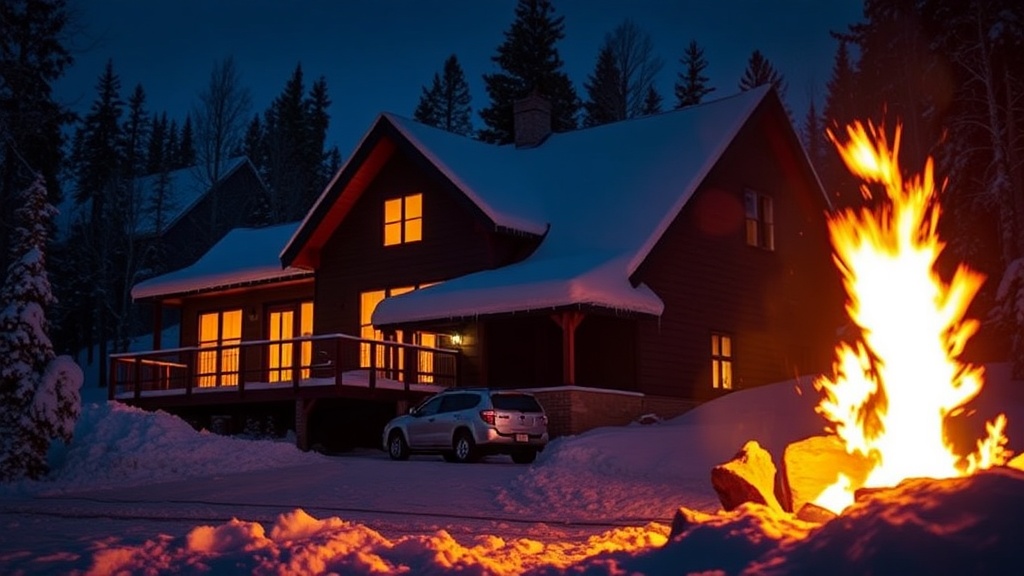
Setting Up Your Bracebridge Home for Winter Survival

A lot of people think that if you live in Bracebridge, you can just wait until the first heavy snowfall hits before you worry about your home's exterior. That's a mistake that ends up costing much more than a simple afternoon of prep work. Living in the Muskoka region means we deal with real, heavy snow—not just a light dusting. If you aren't ready by the time the temperature drops below zero, you'll find yourself dealing with frozen pipes, high heating bills, and ice buildup on your roof before you even realize there was a problem.
Preparing your residence in Bracebridge requires a specific focus on our local climate, particularly the way the wind whips through the valley and how the frost settles in the older neighbourhoods. Whether you are living in a heritage home near the downtown core or a newer build near the Taylor Rapids area, the physics of a Muskoka winter remain the same. We need to look at insulation, water management, and heat retention to keep our homes functional during the coldest months.
Where should I focus my winterizing efforts in Bracebridge?
The first thing you should check is your exterior water management. In Bracebridge, we often see heavy melt-off in the spring, and if your gutters are clogged with debris from the local maple trees, you're asking for trouble. Ice dams are a common headache for us. When snow melts on your roof and then refreezes at the eaves, it creates a block that pushes water back under your shingles. Make sure your downspouts are directed away from your foundation—aim for at least three feet of clearance. This prevents the ground around your house from thawing and refreezing, which can lead to basement seepage in many Bracebridge properties.
Next, look at your windows and doors. Even if you have modern windows, the seals can degrade over time. A simple way to test for drafts is to feel around the edges of your frames during a particularly windy day. If you feel a chill, you might need to apply new weatherstripping. For those of us in older homes near the town centre, adding heavy curtains or even temporary window film can make a massive difference in how much heat stays inside your living space. It's a small step that keeps your furnace from working overtime.
How can I prevent frozen pipes during a Bracebridge cold snap?
Frozen pipes are a nightmare that can ruin your winter. In our part of Ontario, a sudden dip in temperature can freeze an exposed pipe in a matter of hours. The most important rule is to identify any pipes that run through unheated areas like a garage or a crawlspace. If you have a pipe running through a garage, it's a good idea to wrap it in foam insulation. If you have a water line that enters the home through a basement wall, ensure that area is well-insulated.
During an extreme cold snap, which we see quite often here in Bracebridge, you can also do something very simple: leave a tiny trickle of water running from your faucets. This keeps the water moving and prevents the pressure from building up if a freeze does occur. If you notice a sudden drop in water pressure, it might be a sign that a line has already frozen. Don't wait—check your exterior hose bibs immediately. Always disconnect your garden hoses and shut off the water at the valve for any outdoor faucets before the first frost hits. This is a common mistake that leads to burst pipes every single year.
What tools do I need for local winter maintenance?
Maintaining a property in Bracebridge requires more than just a shovel. You need a toolkit that is actually designed for the heavy, wet snow we get. While a standard shovel works for light powder, a heavy-duty snow pusher is much better for the thick layers that accumulate on our driveways. If you have a large property, a snowblower is almost a requirement rather than a luxury. Make sure you service your snowblower in the autumn—check the oil, the spark plug, and the fuel—so it doesn't fail you during a midnight blizzard.
Salt and sand are also your friends, but use them wisely. Too much salt can damage the concrete on your walkways or harm the grass in your yard. If you're living near the more wooded areas of Bracebridge, be mindful of how much salt you're using, as runoff can affect the local environment. Keeping a stock of non-corrosive ice melt is a smart move to ensure your walkways stay safe for guests and even for local delivery drivers.
| Task | Frequency | Focus Area |
|---|---|---|
| Gutter Cleaning | Once a year (Autumn) | Roof eaves and downspouts |
| Window Sealing | Once a year (Late Fall) | Draft detection and weatherstripping |
| Pipe Inspection | Before first freeze | Unheated garage/basement areas |
| Tool Maintenance | Every October | Snowblower and shovel inspection |
We also can't forget about the garage. If you store your vehicle in a garage, ensure it is well-ventilated. If you're using a space heater in the garage to keep things warm, never leave it running unattended. It's a simple safety rule, but one that prevents many local accidents. Keeping your garage door tracks lubricated with a silicone spray can also prevent the door from sticking when the temperature hits -20°C.
As we head into another season, take a moment to walk around your property. Look at the trees near your power lines, too. In Bracebridge, heavy snow loads can snap branches, which is a risk to your home and the local electrical grid. If you see a limb hanging precariously over your roof, it might be time to call a local arborist. Being proactive is the best way to ensure your home remains a safe, warm sanctuary all winter long.