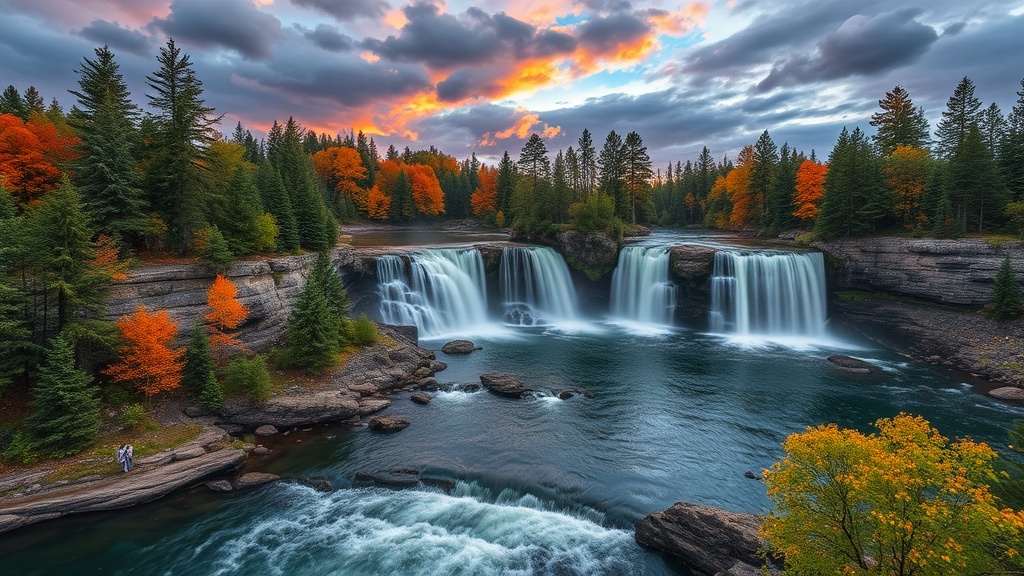
Best Time to Visit Bracebridge Falls for Stunning Photos

Quick Tip
Visit Bracebridge Falls 30 minutes after sunrise on a weekday in late September for the best combination of soft lighting, fall colors, and minimal crowds.
This post covers the exact timing, seasons, and conditions for capturing the best photos at Bracebridge Falls — plus what gear works and when to avoid the crowds. Whether you're shooting with a Canon EOS R5 or just an iPhone 15 Pro, timing matters more than equipment here.
What's the Best Season to Photograph Bracebridge Falls?
Fall wins — but it's close. Mid-October through early November delivers golden maple reflections, misty mornings, and water levels that aren't reduced to a trickle. The Muskoka Lakes Association maintains trail access through the fall, though you'll want sturdy boots after rainfall.
Spring runoff (late April to mid-May) offers the most dramatic water volume. The cascade becomes a thundering wall — exciting, but harder to compose. Summer's dependable, yet flat light at midday washes out textures. Winter? Absolutely stunning if you don't mind frozen fingers and the occasional ice hazard.
Here's the thing — the "best" season depends on the shot you want. Silky water effects? Fall. Raw power? Spring. Frozen fantasy? January.
| Season | Best For | Challenges |
|---|---|---|
| Fall (Oct-Nov) | Colors, mist, balanced flow | Weekend crowds, parking limits |
| Spring (Apr-May) | Maximum water volume | Muddy trails, harsh midday sun |
| Winter (Jan-Feb) | Ice formations, no people | Cold gear batteries, slippery rocks |
| Summer (Jun-Aug) | Easy access, long days | Flat light, reduced water flow |
What Time of Day Gets the Best Light at the Falls?
Golden hour — both of them. Sunrise beats sunset here because the eastern exposure catches first light filtering through the birch canopy. Arrive 30 minutes before official sunrise. You'll get soft sidelight on the water without the harsh contrast that ruins exposure at noon.
The catch? Mosquitoes own this place in June and July. Bring repellent — the Deep Woods Sportsmen formula works — or you'll be swatting while bracketing exposures. Late afternoon (roughly 90 minutes before sunset) creates warm backlight through the trees, excellent for silhouetting the wooden viewing platform against the spray.
Cloudy overcast days? Don't stay home. Diffused light eliminates harsh shadows on the rock face — perfect for bringing out the limestone textures that define this section of the Muskoka waterfall circuit.
Where Exactly Should You Set Up Your Tripod?
Three spots deliver consistently — the main boardwalk (obvious but crowded), the lower riverbank (requires careful footing), and the upstream granite shelf (best for wide angles). The boardwalk offers the classic postcard view but limits composition options. You'll get the same shot as everyone else.
The lower bank — accessed via a short scramble on the trail's north side — places you at water level. Great for foreground rocks, problematic for spray on your lens. Bring a microfiber cloth. Lots of them.
Worth noting: the Town of Bracebridge installed new railings in 2023. They're safer, but they appear in wide shots now. A 50mm equivalent lens or tighter helps eliminate distractions. For smartphone shooters, the native 1x camera (not ultrawide) produces more natural perspective on the cascade.
One final tip — check Muskoka Heritage Place for historical context on the falls' industrial past. Understanding the old mill ruins upstream adds depth to your captions (and your appreciation of the location). Pack a Vanguard VEO 2 tripod — carbon fiber handles the damp conditions without corroding.
Get there early. Stay patient. The mist does what it wants.